
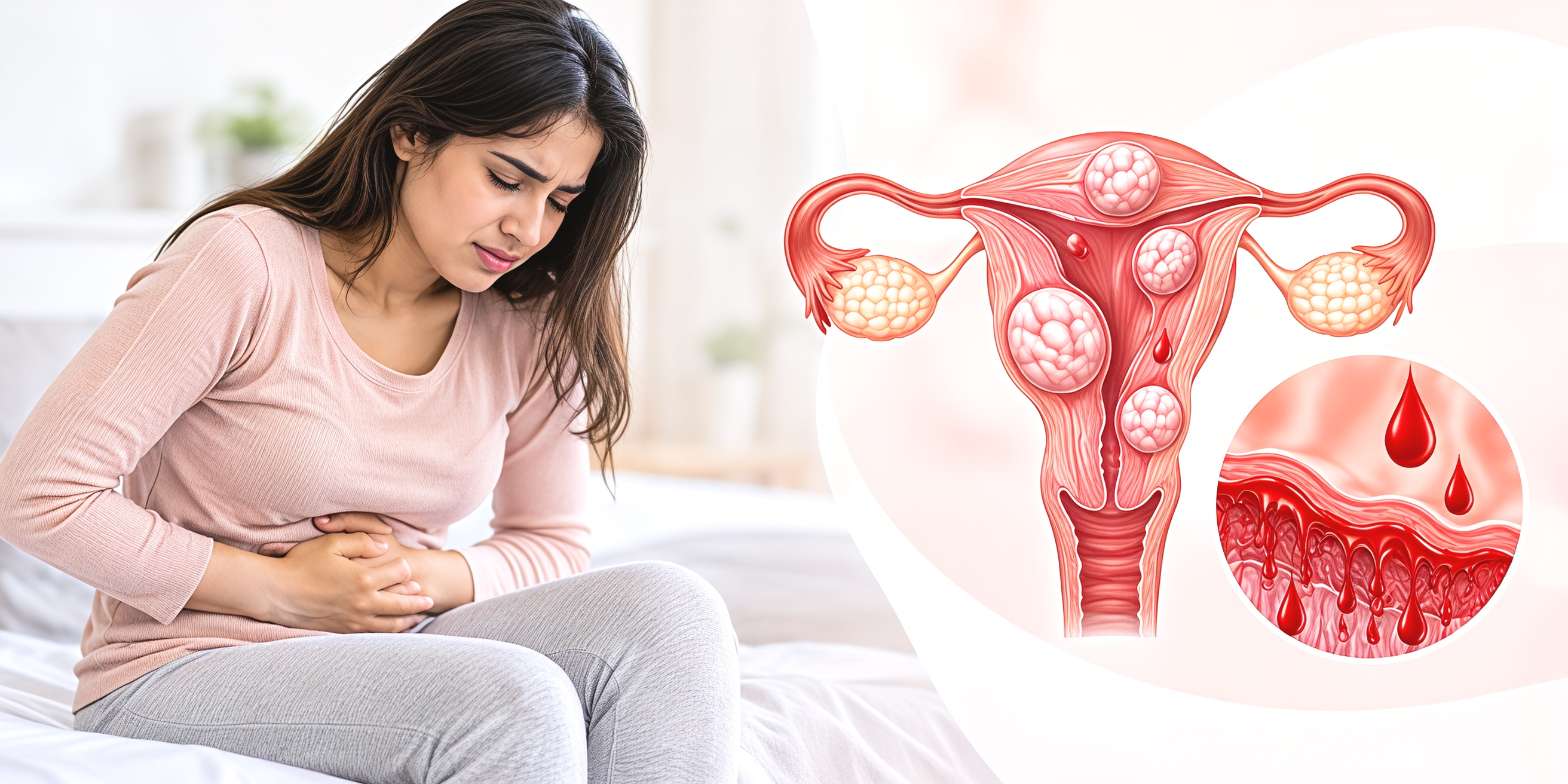
Heavy menstrual bleeding is a concern that many women experience but often continue to tolerate for years. Some consider heavy periods normal, especially if they have been happening for a long time. However, when menstrual bleeding becomes unusually heavy, prolonged or starts affecting everyday life, it is worth finding out why.
One common cause is uterine fibroids. With more than 25 years of experience in women’s health, I have seen how symptoms such as heavy periods, pelvic discomfort and fatigue can gradually affect a woman’s physical and emotional well-being. Understanding the possible cause is an important first step.
What Are Uterine Fibroids?
Uterine fibroids, also called fibroids or leiomyomas, are non-cancerous growths that develop in the muscle tissue of the uterus. A woman may have one fibroid or several, and they can range from very small to considerably larger in size.
Fibroids are quite common, and many women may have them without experiencing any symptoms. In other cases, depending on their size and location, fibroids can cause heavy menstrual bleeding, prolonged periods, pelvic pressure and pain.
The location of a fibroid is particularly important. Fibroids that grow close to or into the inner cavity of the uterus can be more strongly associated with heavy menstrual bleeding.
Why Do Fibroids Cause Heavy Periods?
One of the most common questions women ask is: “Why are my periods suddenly so heavy?”
Fibroids can affect the shape and surface area of the uterine lining. Some fibroids may also interfere with the normal contraction of the uterus during menstruation. As a result, some women may experience heavier or longer menstrual bleeding.
Signs Your Period May Be Heavier Than Normal
- Needing to change sanitary protection unusually frequently
- Passing large blood clots
- Periods lasting longer than usual
- Bleeding that interferes with work, travel or sleep
- Feeling unusually tired or weak during or after menstruation
- Needing to plan daily activities around menstrual bleeding
Every woman’s menstrual pattern is different, so a change from your usual cycle is often more important than comparing your bleeding with someone else’s.
Symptoms of Fibroid Uterus
Heavy menstrual bleeding is an important symptom, but fibroids do not affect every woman in the same way. Depending on their size and location, uterine fibroids may also be associated with:
- Painful periods
- Pelvic pain or pressure
- A feeling of heaviness in the lower abdomen
- Lower back discomfort
- Frequent urination
- Constipation or pressure on the bowel
- Discomfort during intercourse
- Difficulty conceiving in some cases
It is important to remember that these symptoms are not specific to fibroids. Conditions such as adenomyosis, endometriosis, hormonal problems, thyroid disorders and certain other gynaecological conditions can also cause heavy or painful periods.
Can Heavy Bleeding Cause Anaemia?
Yes. Heavy menstrual bleeding can lead to iron deficiency and anaemia over time. When the body repeatedly loses more blood than it can replace, iron stores may gradually decrease.
A woman may then experience tiredness, weakness, dizziness, headaches, breathlessness or reduced concentration. In my clinical experience, some women do not initially connect their constant fatigue with their heavy periods. If heavy bleeding has been continuing for several months, it is sensible to discuss it with a healthcare professional and consider appropriate blood tests.
How Is Fibroid Uterus Diagnosed?
The evaluation usually begins with a detailed discussion about menstrual cycles, bleeding patterns, pain and other symptoms. Depending on the situation, a doctor may recommend a clinical examination, blood tests when anaemia is suspected, a pelvic ultrasound, or other investigations when clinically required.
An ultrasound can help identify the number, size and location of fibroids. These details are important because the same-sized fibroid can cause very different symptoms depending on where it is located.
Does Every Fibroid Need Treatment?
Not necessarily. Some women have small fibroids that cause no symptoms and may only require observation. Others may have significant bleeding, pain or pressure symptoms that require active management.
The appropriate approach depends on several factors, including the woman’s age, symptoms, fibroid size and location, general health and future pregnancy plans. This is why simply finding a fibroid on an ultrasound does not automatically mean that a woman needs a particular treatment. The complete clinical picture needs to be considered.
When Should You Consult a Doctor?
Do not ignore menstrual bleeding simply because you have become accustomed to it. Consider a medical evaluation if your periods have become significantly heavier or longer, you are passing unusually large clots, you experience persistent pelvic pain, or heavy bleeding is affecting your normal activities.
Seek prompt medical attention if bleeding is extremely heavy or is accompanied by severe weakness, dizziness, fainting or breathlessness.
Frequently Asked Questions
Can uterine fibroids cause heavy menstrual bleeding?
Yes. Heavy or prolonged menstrual bleeding is one of the commonly recognised symptoms of uterine fibroids, particularly with fibroids affecting the inner part of the uterus.
Are uterine fibroids cancerous?
Most uterine fibroids are benign, meaning they are non-cancerous growths. However, unusual or persistent symptoms should always be medically evaluated.
Can fibroids cause anaemia?
Yes. Repeated heavy menstrual bleeding can result in iron deficiency and anaemia, which may cause tiredness, weakness, dizziness and breathlessness.
Can a woman have fibroids without symptoms?
Yes. Many women with fibroids have no noticeable symptoms, and fibroids may sometimes be discovered during an examination or ultrasound performed for another reason.
Does having fibroids mean I will need surgery?
Not necessarily. Management depends on the symptoms, size and location of the fibroids, the woman’s age, general health and reproductive plans. A doctor can help determine what approach is appropriate.
Can heavy periods be caused by something other than fibroids?
Yes. Heavy menstrual bleeding can have several causes, including hormonal changes, adenomyosis, endometriosis, thyroid problems and other gynaecological conditions. Proper evaluation is therefore important.
A Final Word From Dr. Pooja Malhotra
Heavy periods are not something every woman should simply learn to live with. When menstrual bleeding changes or begins affecting your energy, work, sleep or daily routine, it deserves attention.
Fibroids are common and, in many cases, manageable with appropriate medical assessment and monitoring. The important thing is to understand what is causing your symptoms rather than assuming that heavy bleeding is simply part of your normal cycle.
If you are experiencing heavy menstrual bleeding, painful periods or symptoms associated with fibroid uterus, consult us at Priority Homoeopathy for an appropriate evaluation. Homoeopathy plays a wonderful role in managing female problems, without hormonal pills or synthetic drugs.
This article is for general educational purposes only and is not a substitute for personal medical diagnosis, examination or treatment. Individual symptoms and treatment requirements can vary.
Leave a Comment
Share your experience or ask a question
Post a Comment